 Max Gramser
08197c4ae1
The CYD restarted under load: a slider fill rounded less than its track made
LVGL draw the fill into a buffer of its own size on every redraw (15-20 KB), and
when that allocation failed the refresh retried until the task watchdog fired.
Track and fill now share one radius, and tests/test_layer_free.py keeps every
layer-making style out of the profiles, the packages and the firmware headers.

A tile keeps only the fields every card uses; climate modes, select options,
weather, sun and timer times, the media title and the vacuum rows moved to an
Extra block that exists only while a state needs one, and the state copy became
a fingerprint. runtime_tiles::model went from 24,296 to 8,216 bytes.

The manual profile that bound tiles to fixed entities in the YAML is gone:
331 TILE* substitutions, DYNAMIC_TILES/TILE_COUNT/DIRECT_ACTIONS, the 80 Home
Assistant subscriptions, its tap handlers and scripts, its own vacuum card, its
guides and helper scripts, and the five stale header copies in the repository
root that two C++ tests were compiling instead of the components. esphome config
of both Easy profiles is unchanged by that cleanup.

tile_scroll and the wake overlay no longer light up on a tap, and the debug
sensor min_free reports the lowest free heap since boot. On the bench CYD static
RAM went from 32.0% to 22.8% and free heap from 64-77 KB to about 101 KB, with
78 KB as the lowest point over thirteen hours without a restart.

Co-Authored-By: Claude Opus 5 <noreply@anthropic.com>
ESP Screen Manager
Find your Home Assistant entities, arrange up to twenty tiles, and push changes to a CYD or Guition screen without reflashing. Includes installation help, a unique per-device YAML, and support for multiple screens.
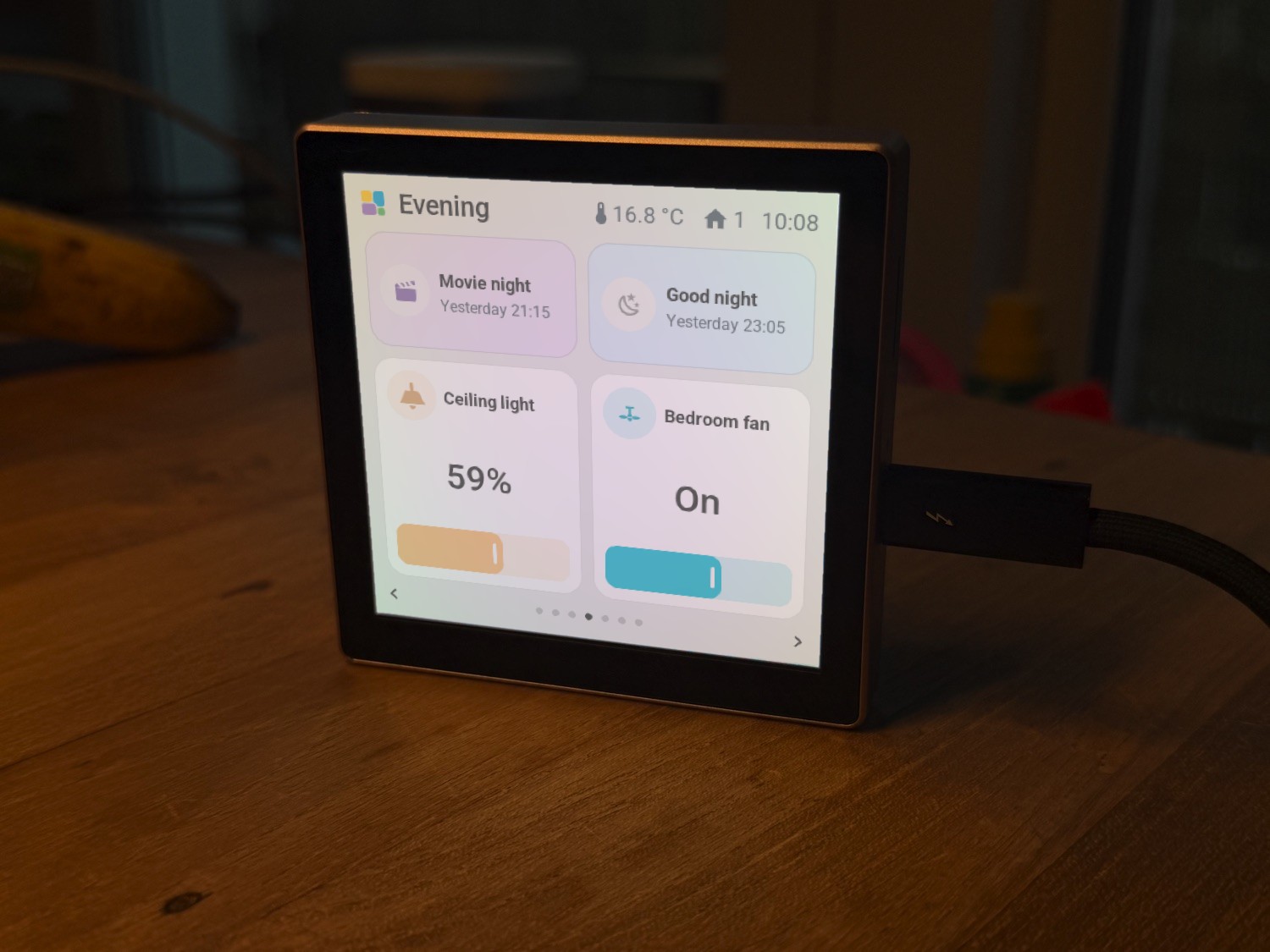
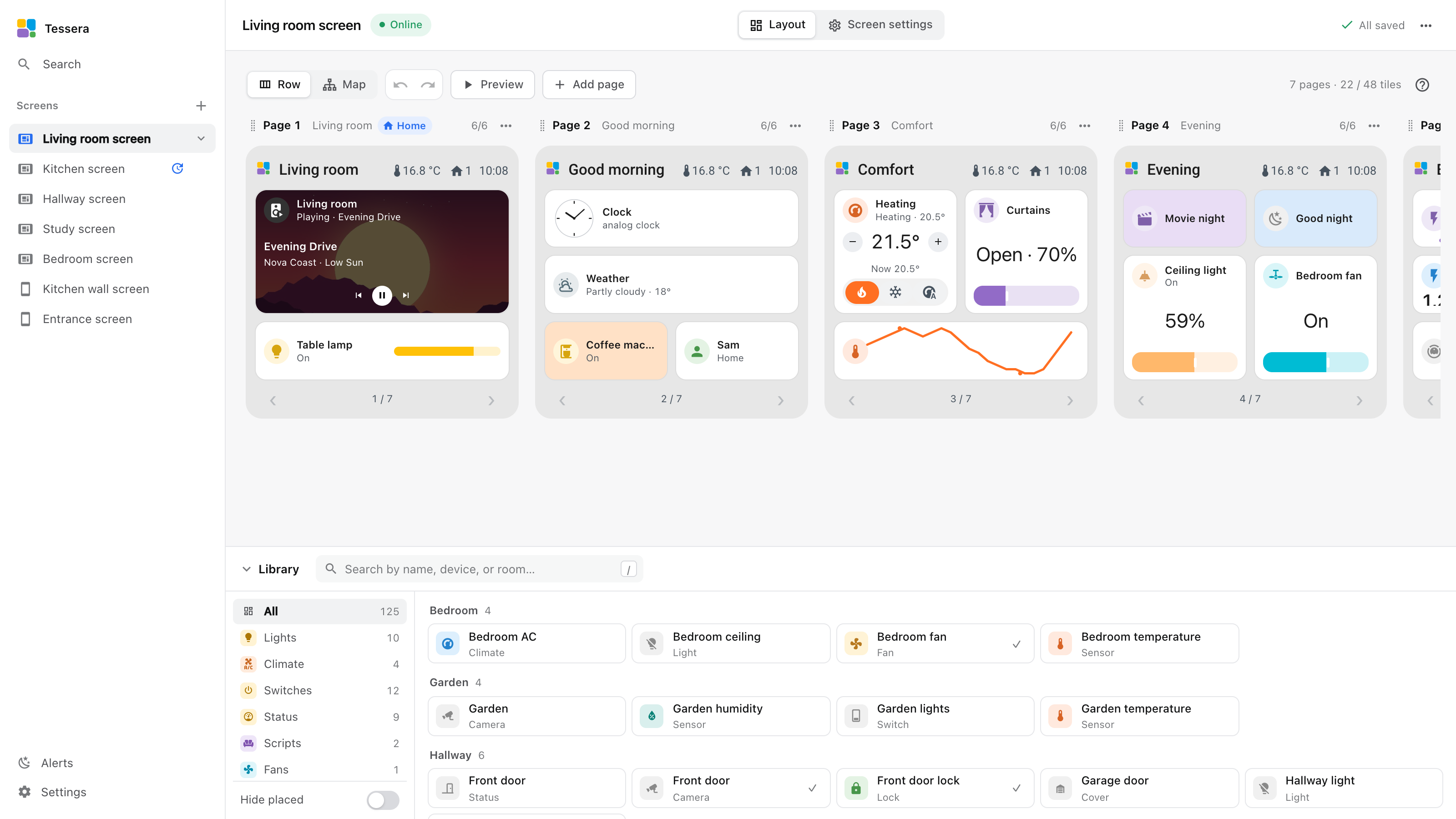
Open the web interface after installation. See Documentation for the first flash. The app uses Home Assistant Ingress and needs no login or token of its own. More screenshots are in the project README.